Honoring the Thread Without Wearing the Whole Cloth: A New Approach to Heirloom Bridal Design
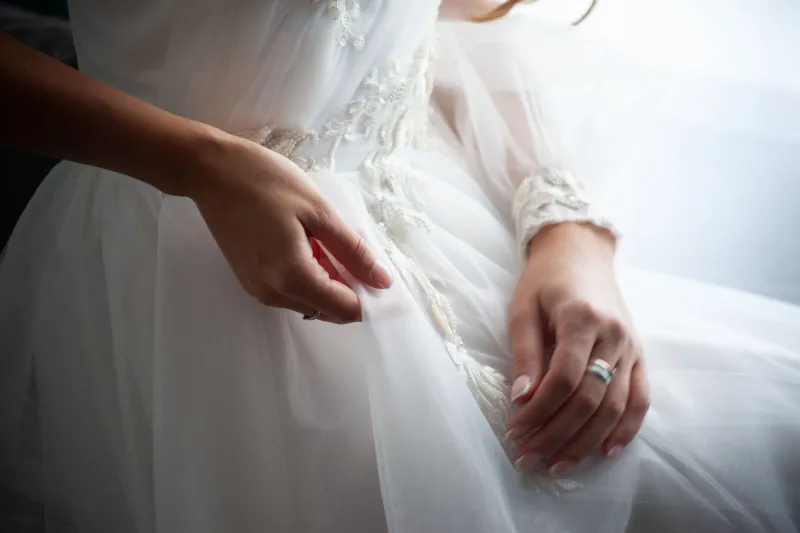
The gown arrives in a box — sometimes a cedar chest, sometimes a department store bag that has survived three decades in a closet — and with it arrives an entire inheritance of feeling. A mother's hope. A grandmother's pride. The specific, irreplaceable weight of being loved across time.
For many brides, the question of whether to wear a family gown is among the most emotionally complex decisions of the entire wedding planning process. It is not simply a question of aesthetics, though aesthetics matter. It is a question of identity, loyalty, and the particular tension between honoring where one comes from and claiming who one is.
At Kay's Chapel Boutique, we have guided many clients through this exact threshold. What we have learned, through years of these conversations, is that the choice is rarely as binary as it first appears. Between wearing the gown exactly as it is and setting it aside entirely, there exists a rich and largely unexplored middle ground — one where family history and individual identity are not in competition but in conversation.
Why the Replica Is Rarely the Answer
The instinct to replicate a beloved family gown is understandable. If a mother's dress was beautiful, why not recreate it precisely? If the lace was meaningful, why not source the same pattern?
The difficulty with direct replication is that it tends to produce something that is neither fully the original nor fully the bride's own. A replica carries none of the original garment's provenance — the decades of careful storage, the specific occasion of its first wearing, the irreplaceable fact of having been worn by someone you love. And yet it also denies the current bride the experience of choosing something that reflects her own sensibility, her own body, her own moment in time.
Replication, in other words, often satisfies neither the desire for connection nor the desire for individuality. It occupies an uncomfortable middle position that feels like compromise rather than synthesis.
True heirloom-inspired design takes a different approach entirely.
The Blueprint Approach: Drawing Meaning From Design Elements
Rather than asking can I wear this gown?, the more productive question is what does this gown mean, and how can that meaning be carried forward in something new?
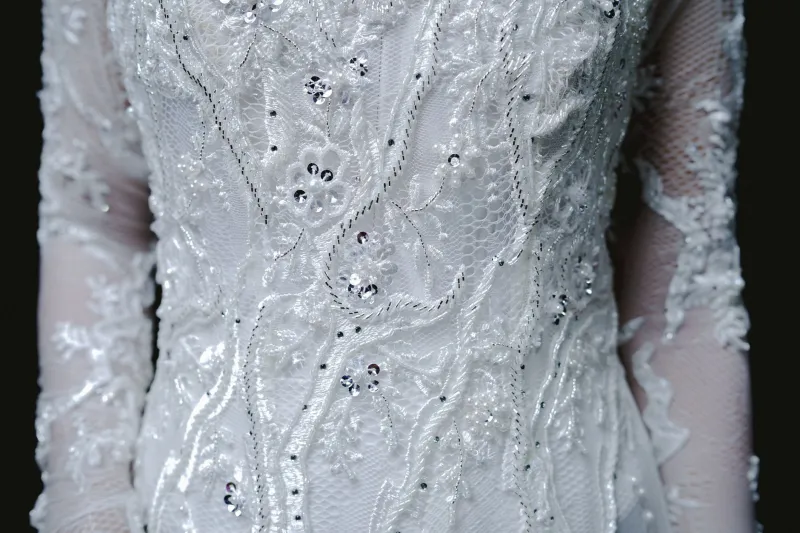
This reframing opens an entirely different design conversation. A mother's gown that features elaborate beaded sleeves need not be worn in its entirety for those sleeves to carry forward. A skilled atelier can study the beadwork pattern, identify the motif that makes it distinctive, and incorporate a variation of that motif into a new gown's bodice — present as an echo rather than a quotation.
Similarly, a grandmother's gown constructed in a style that no longer flatters contemporary silhouettes can yield its lace panels to a new creation. The original fabric — with all its history, its particular weight, its slight yellowing that speaks of time — becomes an element of the new garment rather than its entirety. This approach is sometimes called textile incorporation, and it is among the most meaningful services offered through our boutique's custom design program.
One client, a bride from the Pacific Northwest, brought us her mother's 1987 ballgown — enormous puffed sleeves, heavily structured skirt, ivory satin with a cathedral train. She loved her mother deeply and wanted to honor the gown, but she was also a woman of spare, modern taste who would have felt entirely unlike herself in that silhouette. Together, we removed the original lace trim from the gown's hem and neckline and incorporated it into the overlay of a new, clean-lined column dress. The result was understated and contemporary — and carried within it, quite literally, the thread of her mother's wedding day.
Conversations That Make the Design Possible
Heirloom-inspired commissions require a different kind of styling consultation than a standard custom order. Before any design decisions are made, we spend significant time simply listening.
What is the story of the original gown? Who wore it, and under what circumstances? What elements does the client find most meaningful — the silhouette, the fabric, a specific embellishment, the color? What does she want to feel on her own wedding day, and how does that feeling relate to — or differ from — what she imagines her mother or grandmother felt?
These questions are not merely sentimental. They are design intelligence. The answers tell us which elements of the original gown are load-bearing in an emotional sense — the ones that, if carried forward, will make the new garment feel genuinely connected to its source — and which elements are incidental, present in the original because of the fashion of the era rather than because of any deeper significance.
A bride who says, it's the lace that matters — my grandmother made it by hand is telling us something very specific about where the meaning lives. A bride who says, it's just the fact that she wore it on her wedding day is telling us something different — that the connection is more about spiritual continuity than material preservation, which opens different design possibilities entirely.
Practical Strategies for Honoring Family Gowns
For clients navigating this decision, we offer several approaches that have served our clients well:
Textile Incorporation: As described above, elements of the original gown — lace, beading, ribbon, even buttons — are carefully removed and incorporated into the new design. This requires an experienced hand and careful preservation of the original garment's structural integrity.
Motif Translation: A skilled embroiderer or beader studies the original gown's decorative motifs and renders them in new materials appropriate to the new silhouette. The grandmother's rose-patterned lace becomes a hand-embroidered rose at the neckline of a contemporary sheath.
Color Homage: When the original gown's fabric cannot be incorporated, the bride may choose to honor it through color — selecting a shade that references the original's ivory, champagne, or blush rather than defaulting to pure white.
Accessory Preservation: In some cases, the most honest approach is to wear a completely new gown while incorporating the original garment's most meaningful element as an accessory — a veil made from the original fabric, a sash fashioned from its train, a wrap constructed from its skirt.
The Gift of Continuity Without Constraint
The most meaningful heirloom-inspired designs we have produced at Kay's Chapel Boutique are not the ones that look most like the original garment. They are the ones that feel most like the relationship between the two women — the one who wore the gown then, and the one who wears something new now.
Family history, at its best, is not a set of instructions. It is a set of values, expressed through specific forms that were appropriate to their moment. The work of each generation is not to repeat those forms but to find new expressions for the same values: love, commitment, the desire to mark a sacred moment with something beautiful and lasting.
At Kay's Chapel Boutique, we consider it one of our deepest privileges to assist in that translation — to help a bride carry her family's story forward in a gown that is, unmistakably, entirely her own.