Stitched With Intention: The Hidden Architecture That Makes a Gown Feel Like It Was Made for You Alone
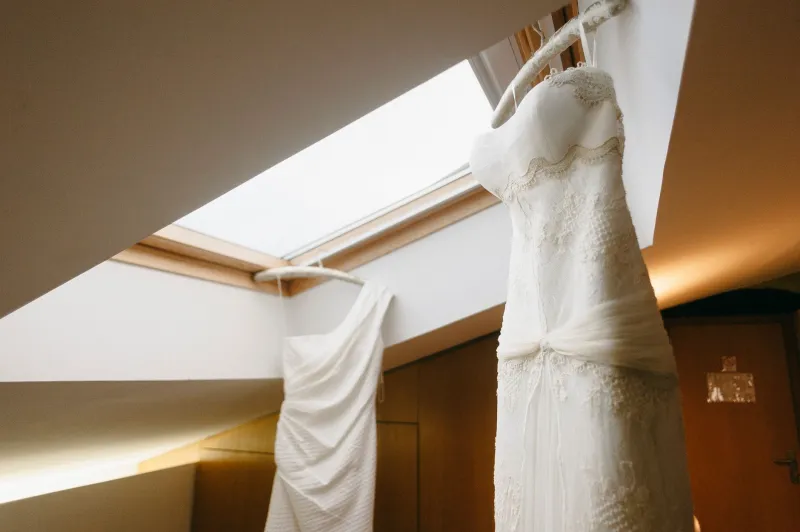
There is a moment — one that clients at Kay's Chapel Boutique describe with remarkable consistency — when a gown that has been made specifically for them is first fully fastened. It is not simply that it fits. It is that it holds. It moves when they move. It breathes when they breathe. It does not resist them or demand adjustment; it simply accompanies them, as though it has always known the shape of their body.
That feeling does not happen by accident. It is the result of dozens of invisible decisions made by skilled hands long before the final garment ever meets the light.
Why Construction Is the Foundation of Sacred Dressing
Most conversations about formal wear begin and end with the visible: the neckline, the silhouette, the fabric, the embellishment. These are the elements that photograph beautifully and translate easily into words. But experienced dressmakers — and the clients who have worn truly exceptional gowns — will tell you that what you cannot see is what you will feel for every hour you are dressed.
Couture construction is, at its core, a form of structural engineering applied to textile. Every seam is a decision. Every dart is a conversation between the maker and the body it serves. The placement of a single side seam, shifted even a centimeter forward or back, can change the way a gown rotates with the hips during movement. A poorly positioned princess seam can create the illusion of imbalance; a thoughtfully placed one can make the torso appear as though it were carved from a single, elegant line.
This is not hyperbole. It is geometry made intimate.
The Interior World of a Well-Made Gown
Perhaps no element of couture construction is more misunderstood — or more consequential — than the interior architecture of a formal gown. Off-the-rack garments, even expensive ones, are built around standardized internal structures designed to accommodate a range of bodies. The result is a garment that fits most people adequately and almost no one perfectly.
In made-to-order construction, the interior is designed around a specific body's needs. Internal boning channels are not simply inserted to create a corseted silhouette; they are mapped to the individual's ribcage, waist, and hip proportions. A client with a longer torso requires channels spaced differently than one with a shorter rise. A client whose back curves more dramatically needs boning that supports without compressing.
Beyond boning, there is the matter of internal support panels — often called "built-in foundations" — that distribute weight across the body rather than concentrating it at a single point. In a gown with a full skirt or significant train, this engineering becomes especially critical. Without it, even the most breathtaking silhouette will pull, shift, and fatigue the wearer over the course of a long event. With it, the gown becomes almost effortless to inhabit.
At Kay's Chapel Boutique, the fitting process is designed precisely to surface these needs. Our stylists are trained not merely to assess how a gown looks, but to observe how the body moves within it — where tension accumulates, where ease is needed, and where the interior structure must be reimagined to serve the individual rather than the average.
Seams as Storytellers
In mass production, seams exist to hold fabric together. In couture, they do something far more nuanced: they sculpt.
Consider the French seam — a technique in which the raw edges of fabric are enclosed entirely within a second seam allowance, creating a finish that is smooth on both the interior and exterior. It is more time-consuming than a standard seam finish, and it is entirely invisible once the gown is complete. A client will never see it. But she will feel the difference — the absence of any scratching or fraying against the skin, the quiet assurance of a garment that has been finished with the same care on the inside as the outside.
Or consider the bias-cut seam, in which fabric is cut at a 45-degree angle to the grain. Bias cutting allows fabric to drape with a fluidity that straight-grain cutting cannot achieve. It clings and releases in response to movement in a way that is almost liquid. But it also requires exceptional skill to sew cleanly, because bias-cut fabric stretches under the needle and can distort if handled incorrectly. When it is done well, the result is a gown that seems to have no seams at all — only an unbroken conversation between cloth and body.
These choices are not merely technical. They are expressive. A maker who selects a particular seam treatment for a particular client is making an argument about how that client deserves to feel.
The Fitting as Sacred Ritual
In American bridal and formal wear culture, fittings are often treated as a logistical necessity — something to be scheduled, completed, and checked off a list. At Kay's Chapel Boutique, we hold a different view.
The fitting is where construction becomes personal. It is the moment when the abstract decisions made on a dress form are tested against the living, breathing reality of the person who will wear the garment. A skilled fitter does not simply pin fabric; she listens. She watches how the client stands when she is relaxed versus when she is aware of being observed. She notes where the body naturally wants to carry weight and where it seeks freedom. She asks questions that may seem philosophical — How do you want to feel when you walk into the room? What do you want your body to be able to do tonight? — because the answers directly inform the adjustments she will make.
This is the intimacy of couture construction. It is a process that insists on knowing you before it can truly serve you.
What Is Lost in the Mass Market
None of this is meant as a dismissal of ready-to-wear fashion, which has its own beauty and accessibility. But it is worth naming honestly what is forfeited when a garment is designed for no one in particular.
When construction is standardized, the body is asked to conform to the garment. When construction is personalized, the garment conforms to the body. This is not a small distinction. For occasions that carry genuine weight — a wedding, a milestone celebration, a moment you will carry with you for the rest of your life — the difference between being dressed and being held by what you wear is the difference between presence and performance.
The women who come to Kay's Chapel Boutique are not simply looking for something beautiful to wear. They are looking for a garment that understands them. And the atelier tradition of couture construction — with all of its invisible seams, its interior architecture, its bias-cut conversations with the body — is one of the most enduring ways that fashion has ever found to say: you were worth this level of care.
That, in the end, is what sacred dressing means. Not grandeur for its own sake, but attention given so completely and so precisely that the result feels less like a garment and more like a second skin — one stitched, from the very beginning, with you in mind.