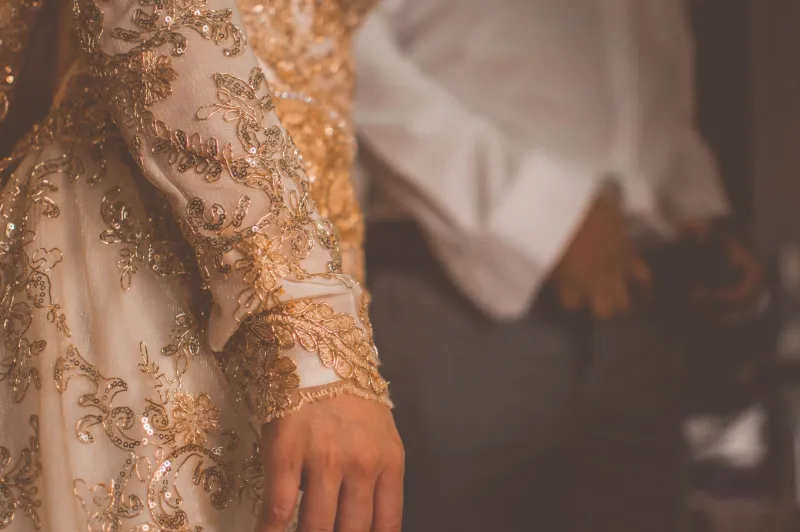
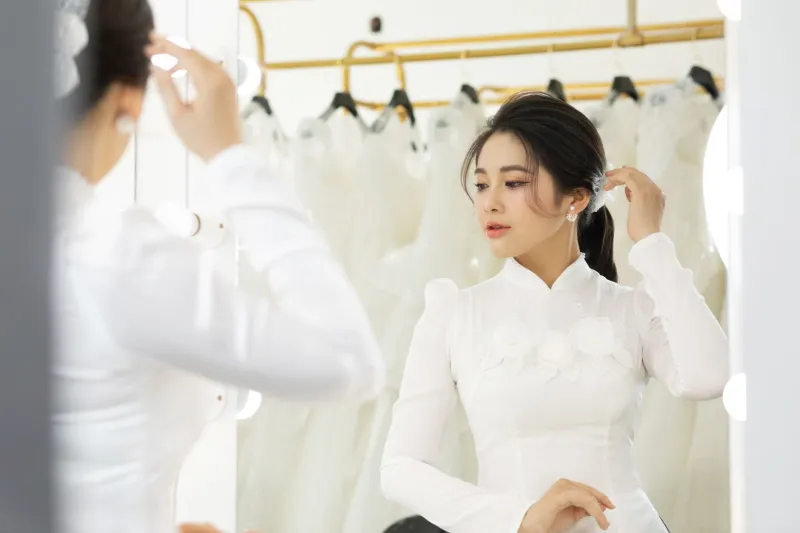
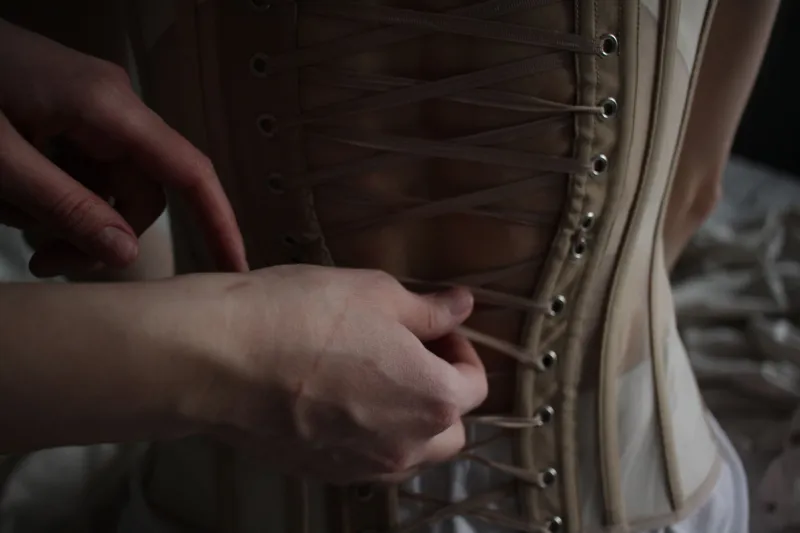
Where the Gown Finds Its Voice: The Sacred Art of Bridal Alterations
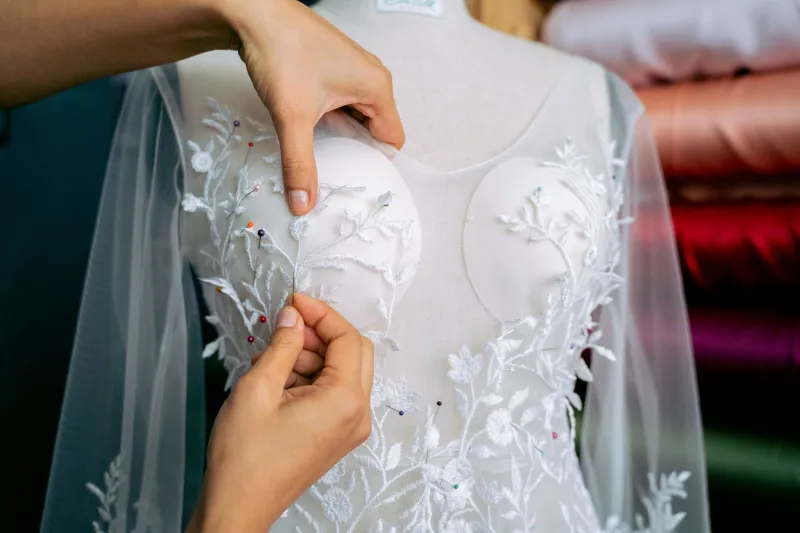
There is a moment, somewhere between the second and third fitting, when everything changes. The seams have been let in or released, the hem has found its rightful place, and the bodice — which once sat slightly apart from the body, polite but distant — now rests against the skin as though it were always meant to be there. This is not a small moment. This is the moment a gown becomes yours.
At Kay's Chapel Boutique, we speak often about the sacred nature of formal wear. But sacredness, we have learned, is rarely instantaneous. It is earned through process, through patience, through the careful and considered work of hands that understand both cloth and the human spirit. The fitting room is where that work unfolds.
More Than Measurements
Most brides arrive at their first fitting with a clear vision of the end result, but far less certainty about the path to get there. This is entirely natural. Alterations are, by their very nature, a discipline of transformation — and transformation is rarely linear.
A skilled seamstress or master tailor does not simply measure. She observes. She watches how you stand when you think no one is looking, how your posture shifts when you feel confident versus uncertain, how the fabric responds to your particular way of carrying yourself through a room. These observations are data points as important as any number on a measuring tape.
The alterations process typically unfolds across multiple appointments. A first fitting establishes the foundation: what needs to be taken in, what requires releasing, where the structure needs reinforcement. Subsequent fittings refine and respond. Each session is a conversation — between client and craftsperson, between vision and reality, between the gown's original design and the body it is now learning to serve.
The Language of the Fitting Room
Communicating your needs during fittings is a skill, and one worth developing before you ever step onto the fitting platform. Vague language — "it feels a little off" or "something isn't quite right" — is understandable, but specificity is far more useful.
Consider arriving at each appointment with language that describes sensation as much as appearance. Does the bodice feel restrictive across the ribs when you breathe deeply? Does the skirt pull forward when you walk? Does the neckline gap slightly when you look down? These sensory observations give a skilled alterations professional the precise information she needs to make targeted, meaningful adjustments.
Bring photographs of how you envision moving in your gown — walking toward an altar, descending stairs, embracing someone you love. Movement is rarely considered during the static experience of trying on a gown in a boutique, yet it is central to how the garment will actually perform on your occasion day. A gown that looks perfect standing still but restricts your stride is not yet finished.
The Collaboration as Spiritual Practice
There is something deeply intimate about the alterations relationship that deserves acknowledgment. You are standing, often quite literally, in a state of vulnerability — in undergarments, in an unfinished garment, being pinned and adjusted by another person whose sole focus is making you feel extraordinary. This is not merely a professional transaction. It is an act of care.
The most meaningful fittings we witness at Kay's Chapel Boutique are the ones in which the client arrives with openness rather than rigidity — willing to hear suggestions, willing to consider small adjustments that might not have been part of the original vision but that serve the body and the occasion more beautifully. A neckline lowered by half an inch. A sleeve hem shortened to reveal a wrist. A bustle configuration that creates a more graceful silhouette from behind. These small acts of creative collaboration are where the magic lives.
Trust, extended in both directions, is the currency of an exceptional fitting room experience.
What to Expect, and When
For bridal alterations specifically, timing matters enormously. Most experts recommend beginning the alterations process no later than four months before the wedding date, with the final fitting scheduled no more than two to three weeks prior to the event — close enough that the body has settled into its pre-wedding state, but far enough to allow for any last-minute refinements.
Plan for a minimum of two to three fittings for most gowns, and three to five for more complex constructions involving structured bodices, cathedral trains, or intricate embellishment work. Bring your wedding shoes — or shoes of the precise heel height you intend to wear — to every appointment without exception. The hem of your gown is calibrated to your footwear, and a miscalculation here can undermine even the most exquisitely executed alterations.
For formal wear beyond bridal — mother-of-the-bride ensembles, anniversary gowns, milestone celebration attire — the same principles apply, though timelines may be more compressed. Two fittings are generally sufficient for simpler silhouettes; more architectural pieces deserve additional attention.
The Finished Gown
When the alterations are complete and you stand before the mirror in the final fitting, something has shifted that goes beyond the physical. The gown no longer simply fits your body. It has absorbed something of your story — the appointments kept, the choices made, the quiet hours of careful craftsmanship performed on your behalf.
This is why we believe the fitting room is, in its own understated way, one of the most sacred spaces in the entire formal wear journey. Not because of the mirrors or the lighting or the soft carpet underfoot, but because of what happens there: the slow, deliberate, deeply human work of making something beautiful into something that is irrevocably, unmistakably yours.
At Kay's Chapel Boutique, every alteration is approached as an act of devotion — to the craft, to the garment, and above all, to you.