Your Signature in Silk: A Thoughtful Guide to Building a Formal Aesthetic That Is Entirely Your Own
Most of us approach formal occasions the same way we approach a difficult exam: with mild anxiety, last-minute preparation, and a nagging sense that we are not quite ready. We scroll through trend reports, borrow ideas from celebrities, and ultimately arrive at a look that feels assembled rather than chosen. The gown or suit we wear may be beautiful by any objective standard, yet something feels slightly off — as though we are wearing a costume rather than an expression of ourselves.
This experience is far more common than the fashion industry would have you believe, and it is entirely correctable. The solution is not to follow trends more carefully. It is to stop following them altogether — and to begin, instead, the more rewarding work of discovering your own ceremonial signature.
What Is a Ceremonial Signature?
A ceremonial signature is the visual and emotional language you speak when you dress with intention for life's meaningful occasions. It is not a single outfit or a favorite color. It is a coherent aesthetic vocabulary — a set of silhouettes, textures, tones, and details that consistently feel like you when you wear them, regardless of the specific occasion.
Think of it the way you might think of a personal writing style. A skilled writer does not reinvent their voice for each new piece. They develop a distinctive way of using language that carries through everything they create, adapting to context without losing its essential character. Your formal aesthetic can work in precisely the same way — evolving across a wedding, a gala, a milestone birthday dinner, or a formal graduation ceremony while remaining unmistakably yours.
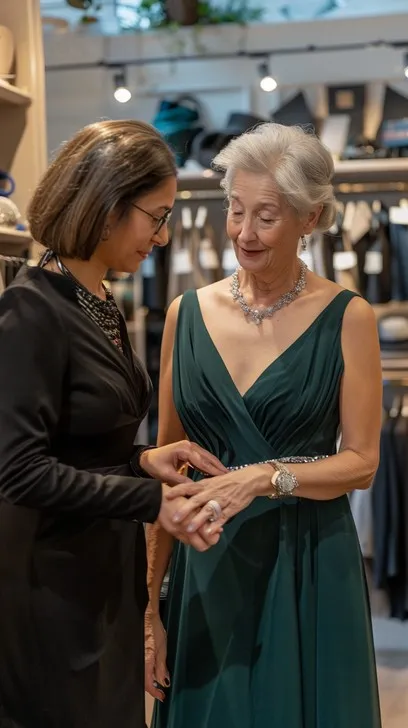
At Kay's Chapel Boutique, we work with clients to uncover this signature through an intentional, unhurried styling process. The insights below reflect what we have learned from years of those conversations.
Step One: Understand Your Values Before You Consider Your Wardrobe
The most common mistake in formal dressing is beginning with the clothes. Before you consider a single silhouette or fabric, it is worth asking a more fundamental question: what do you value in the moments when you dress formally?
Consider the following prompts honestly:
- When you feel most beautifully dressed, what emotion accompanies that feeling? Confidence? Serenity? Joy? Power? The answer reveals something important about what your formal wardrobe needs to deliver.
- What do you most want the people who matter to you to feel when they see you dressed formally? Moved? Proud? Delighted? This question shifts the focus from self-presentation to genuine connection.
- Are there specific fabrics, textures, or sensations that make you feel grounded and at ease? The body carries its own intelligence about what feels right.
Your answers to these questions form the emotional foundation of your ceremonial signature — the why beneath every style choice you will make going forward.
Step Two: Audit What Has Already Worked
Before looking forward, look back. Think through every formal occasion in your adult life — weddings you attended, events you hosted, milestone celebrations — and identify the one or two instances where you felt most genuinely yourself in what you were wearing.
Now ask: what did those outfits have in common? Perhaps they were all in a similar color family. Perhaps they all featured a particular neckline or silhouette. Perhaps they shared a quality of restraint, or conversely, of joyful expressiveness. These commonalities are not coincidences. They are data points pointing toward your signature.
Conversely, identify the occasions where you felt least comfortable or most unlike yourself. What was true of those outfits? The patterns in both lists will illuminate the boundaries of your aesthetic — what belongs inside it, and what does not.
Step Three: Learn the Language of Silhouette and Proportion
Trend literacy is less valuable than silhouette literacy. Understanding which proportions and shapes consistently flatter and feel authentic to your body — regardless of what is fashionable in a given season — is one of the most liberating skills a formal dresser can develop.
A few principles worth knowing:
Silhouette communicates mood. Structured, architectural silhouettes tend to project formality and authority. Soft, fluid silhouettes communicate warmth and ease. Neither is superior — what matters is which mood aligns with your ceremonial signature.
Proportion is personal. The relationship between where a garment falls on your body and how it interacts with your natural lines is deeply individual. A skilled boutique stylist can help you identify the proportional choices that consistently work for your specific frame.
Detail placement directs attention. Embellishment, texture, and color draw the eye. Understanding where you want attention directed — and where you do not — allows you to make choices that serve your comfort and confidence.
Step Four: Build Across Occasions, Not Just For Them
One of the most transformative shifts in formal dressing philosophy is moving from occasion-driven purchasing to wardrobe-building. Rather than acquiring a new formal look for each event, consider how each piece you invest in can function as part of a larger, coherent formal wardrobe.
This approach requires a higher standard of quality in each individual piece — and often a smaller quantity overall. A beautifully constructed formal gown or ensemble from a boutique with genuine expertise in occasion dressing will serve you across multiple events, adapting through accessories, styling adjustments, and personal evolution in a way that a hastily chosen trend piece simply cannot.
At Kay's Chapel Boutique, we often encourage clients to think of their formal wardrobe the way they think of their most meaningful jewelry: built slowly, chosen carefully, and held for the long term.
A Note on the Courage of Personal Style
Developing a ceremonial signature requires a particular kind of courage — the willingness to trust your own instincts over external approval. The most memorable formal dressers are not those who wore the most fashionable gown in the room. They are those who wore the most themselves.
Sacred beauty, as we understand it at Kay's Chapel Boutique, is never about following a formula. It is about the grace that emerges when a person dresses with genuine self-knowledge and intentionality — when the garment and the person inside it are in true alignment.
Your ceremonial signature is already within you. The work of uncovering it is simply the work of paying attention.